Published on 15 June 2026
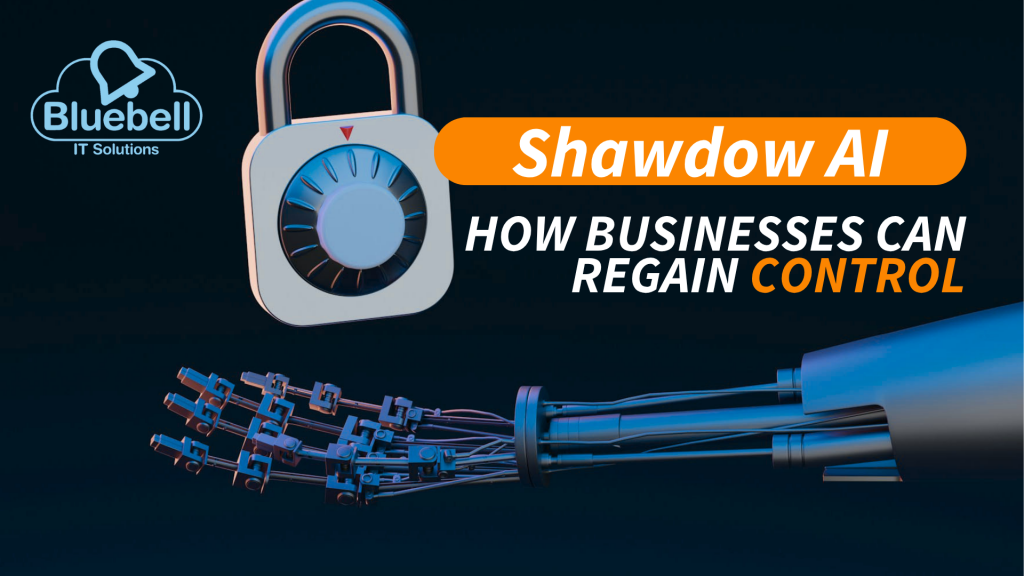
Artificial intelligence is already part of how teams operate, whether there is a formal plan in place or not. Drafting emails, summarising documents, refining ideas, it is happening quietly in the background. For most businesses, the real challenge is not adoption. It is understanding how much of that activity sits outside their control.
Across organisations, employees are turning to AI tools on their own terms. That might mean signing up to free platforms, using personal accounts, or trying tools that have never been reviewed internally. This is what is known as shadow AI, and it is becoming a growing concern for businesses that rely on data, trust, and compliance.
Shadow AI is the use of AI tools without formal approval or oversight. It does not replace normal workflows, it fits alongside them, which is why it is easy to miss.
You will see it in everyday decisions. A marketing team refining messaging using a public chatbot. A salesperson drafting outreach through a personal AI account. Someone pasting internal notes into a tool to save time. Even something as simple as uploading part of a client document to get a sharper summary can mean that information is leaving the business without anyone realising.
These are practical ways people get their work done. The issue is that the tools they rely on often sit outside the organisation’s visibility (Slater‑Robins, TechRadar, 2026).
The challenge with shadow AI is how easily it allows information to move beyond the business without it being obvious.
AI tools are designed to process information. When that information includes internal documents, customer data or pricing details, risk appears straight away.
Copying and pasting into a chatbot feels routine, but it is very different from working within your own systems. That simple action can move information outside your environment, and it happens more often than many organisations realise.
Over time, that kind of exposure can lead to lost trust, compliance issues, or difficult conversations with clients.
In a UK context, responsibility for data does not change because AI is involved. The business remains accountable for how information is handled.
The difficulty comes when employees use tools that have not been reviewed or approved. There is no clear understanding of how data is processed or where it is stored. In that situation, employees make judgement calls themselves, often without clear guidance on what is acceptable (Eaton, Inc, 2025).
That lack of consistency is where risk builds.
Most businesses already have controls around files, emails and access. AI tools do not always fit into those structures.
Interactions with AI platforms look like normal web activity. That makes them harder to track and creates blind spots over time. Data can move without triggering the usual safeguards, leaving businesses unaware of what is being shared or where it is going.
This is not a rare issue. AI adoption has moved quickly, and employee behaviour has followed.
A noticeable share of interactions with generative AI tools now includes sensitive business data, everything from customer information through to internal records (Schuman, CSO, 2025). For many organisations, it is already part of day‑to‑day work.
Smaller businesses tend to move quickly. That flexibility is valuable, but it can also mean tools are adopted without much structure around them.
You often see:
At the same time, SMEs handle valuable information every day. Without clarity around AI usage, that information can be exposed just as easily as in a larger organisation.
Shadow AI usually shows up in subtle ways.
There may be no clear AI policy. Staff might be using personal accounts for work. New tools appear without much discussion. Teams experiment individually rather than following a consistent approach.
If AI is being used but not formally addressed, there is usually more happening beneath the surface.
What works better is putting simple structure around how AI is used without getting in the way of the benefits.
A practical starting point looks like this:
This does not need to be complex. Clarity and consistency tend to have more impact than detailed rules.
AI is helping teams move faster and produce better work. That is valuable, and it is not something businesses want to lose.
What matters is making sure those gains do not come with hidden trade-offs. When expectations are clear, employees tend to make better decisions without needing constant oversight.
Shadow AI often reflects a gap between how quickly new tools are adopted and how slowly policies catch up.
People are trying to get their work done efficiently. Without guidance, they will find their own way of doing that.
The businesses that handle this well focus on visibility first. Once you understand what is being used and how, it becomes much easier to put structure in place and reduce risk.
If shadow AI is something you are starting to think about, or you are unsure how much of it is already happening in your business, it is worth taking a closer look. Bluebell IT can help you put straightforward controls and policies in place so your team can use AI safely, without risk building up in the background.
© 2026 Bluebell IT Solutions - All rights reserved
SEO and Website Design by Loop Digital