Published on 15 August 2026
Hybrid working has changes how businesses operate, but it has also changed the way organisations need to think about cybersecurity. Employees no longer work exclusively from the office. They regularly access company data from home, on the road, and through cloud-based applications like Microsoft 365, Salesforce, and SharePoint.
For many SMEs, the traditional VPN has become the default solution for enabling remote access. While VPNs still have their place, they were never designed for today’s cloud-first way of working. As businesses adopt more SaaS applications and employees connect from a wider range of devices and locations, VPN-only security can introduce performance bottlenecks, create unnecessary complexity, and leave gaps in visibility and protection.
This is where Secure Access Service Edge (SASE) comes in.
At Bluebell IT, we’re seeing more organisations review their remote access strategy as they modernise their infrastructure. Understanding what SASE is, how it differs from traditional VPNs, and whether it’s the right fit for your business can help you make informed decisions about your future cybersecurity strategy.
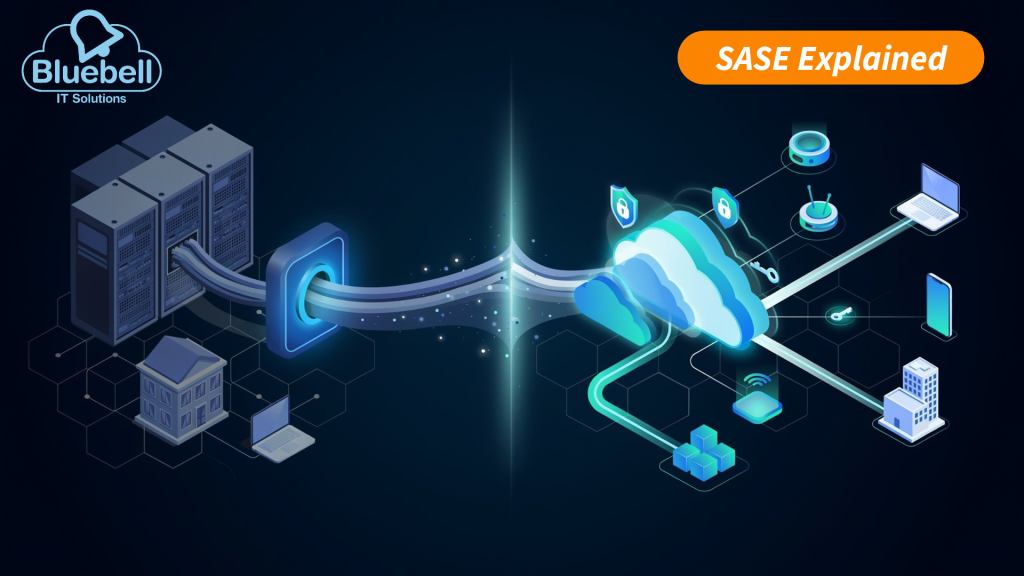
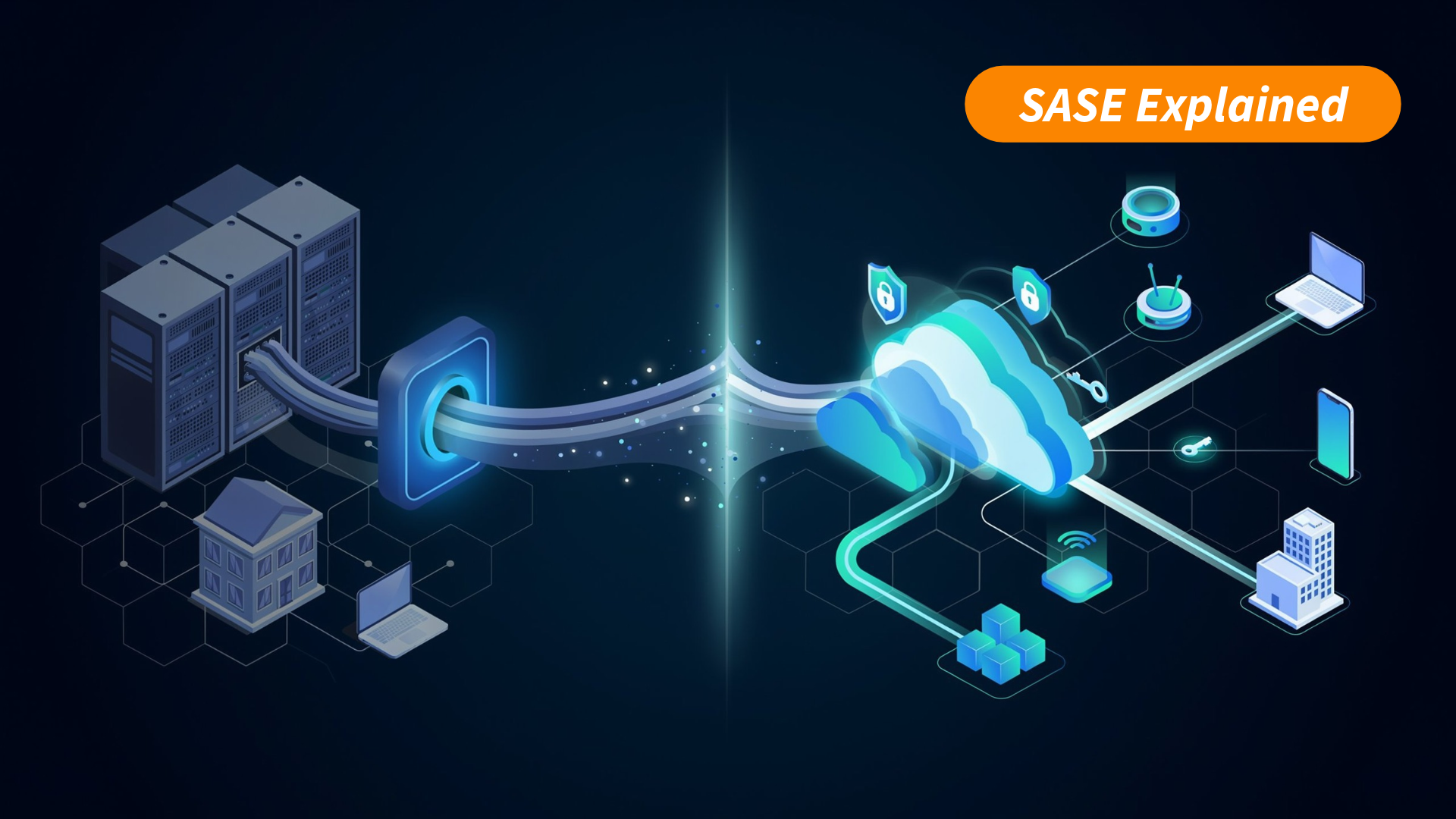
Secure Access Service Edge, or SASE (pronounced “sassy”), is a cloud-based security architecture that combines networking and cybersecurity into a single service.
Instead of sending all remote traffic through a corporate VPN before it reaches cloud applications, SASE delivers security closer to the user. Employees connect securely to the applications and data they need, wherever they are, without routing everything through the office network.
SASE combines several technologies into one platform, including:
Rather than managing multiple security products independently, businesses gain a unified platform that protects users, devices, applications, and data.
Traditional VPNs were designed for a time when most applications were hosted inside the company network.
Today, many organisations operate very differently. Email, collaboration tools, CRM platforms, finance systems, and file storage are often cloud-based, meaning remote users connect to services that never sit inside the office network.
With a traditional VPN:
While VPNs still provide encrypted connections, they generally focus on network access rather than verifying every user, device, and application individually.
As hybrid working continues to grow, many businesses are finding that VPNs alone are no longer enough.
One of the biggest differences between SASE and traditional VPNs is the move towards identity-first security.
Rather than assuming users can be trusted simply because they have connected to the network, SASE verifies identity every time access is requested.
Factors commonly checked include:
This follows Zero Trust principles, where no user or device is automatically trusted simply because they are inside the network.
Instead, access is granted only to the specific applications or resources required.
Not every device should automatically receive access to company resources.
SASE platforms can assess the security posture of a device before allowing connections.
For example, they may verify whether:
If a device falls outside company policy, access can be limited or blocked until the issue is resolved.
This helps reduce the risk of compromised or unmanaged devices introducing threats into the business environment.
Modern cyber threats increasingly target users through websites rather than the corporate network itself.
SASE platforms include secure web gateways that inspect internet traffic in real time.
These services can:
Because these protections are delivered through the cloud, employees receive the same level of security whether they’re in the office, working remotely, or travelling.
Many organisations now rely on dozens of cloud applications, often without IT teams having complete visibility over how they’re being used.
Cloud Access Security Broker (CASB) functionality helps organisations understand and control access to cloud services.
This allows businesses to:
As organisations continue adopting AI tools and cloud services, this level of visibility is becoming increasingly valuable.
One misconception is that moving to SASE requires replacing an entire network overnight.
In reality, most organisations adopt it gradually.
A typical journey might look like this:
Stage One: Strengthen identity management with Microsoft Entra ID, multi-factor authentication, and Conditional Access.
Stage Two: Replace traditional VPN access with Zero Trust Network Access for selected applications.
Stage Three: Introduce secure web filtering and cloud application controls for remote users.
Stage Four: Expand to a full SASE platform that integrates networking, cloud security, threat protection, and remote access into a single solution.
This phased approach allows businesses to modernise at a pace that suits their budget and operational requirements.
There is no one-size-fits-all answer. The right approach depends on how your business operates today and where it is heading.
A traditional VPN may still be appropriate if:
Moving towards Secure Service Edge (SSE) may be the better option if:
A full SASE deployment may be the right long-term choice if:
For many SMEs, the journey doesn’t start with replacing everything. Instead, it begins by identifying where existing remote access solutions are creating operational or security challenges and modernising those areas first.
As businesses continue embracing hybrid working and cloud-first technologies, traditional VPNs are no longer enough on their own to provide secure, efficient access to company systems and data.
SASE offers a modern approach by combining networking, identity, and security into a single cloud-delivered platform. Whether you’re considering stronger identity controls, better cloud visibility, or a complete transformation of your remote access strategy, understanding the options available today can help your business make more informed technology decisions.
If your organisation needs help assessing whether to upgrade your VPN, adopt Secure Service Edge, or implement a full SASE strategy, contact Bluebell IT today.
© 2026 Bluebell IT Solutions - All rights reserved
SEO and Website Design by Loop Digital